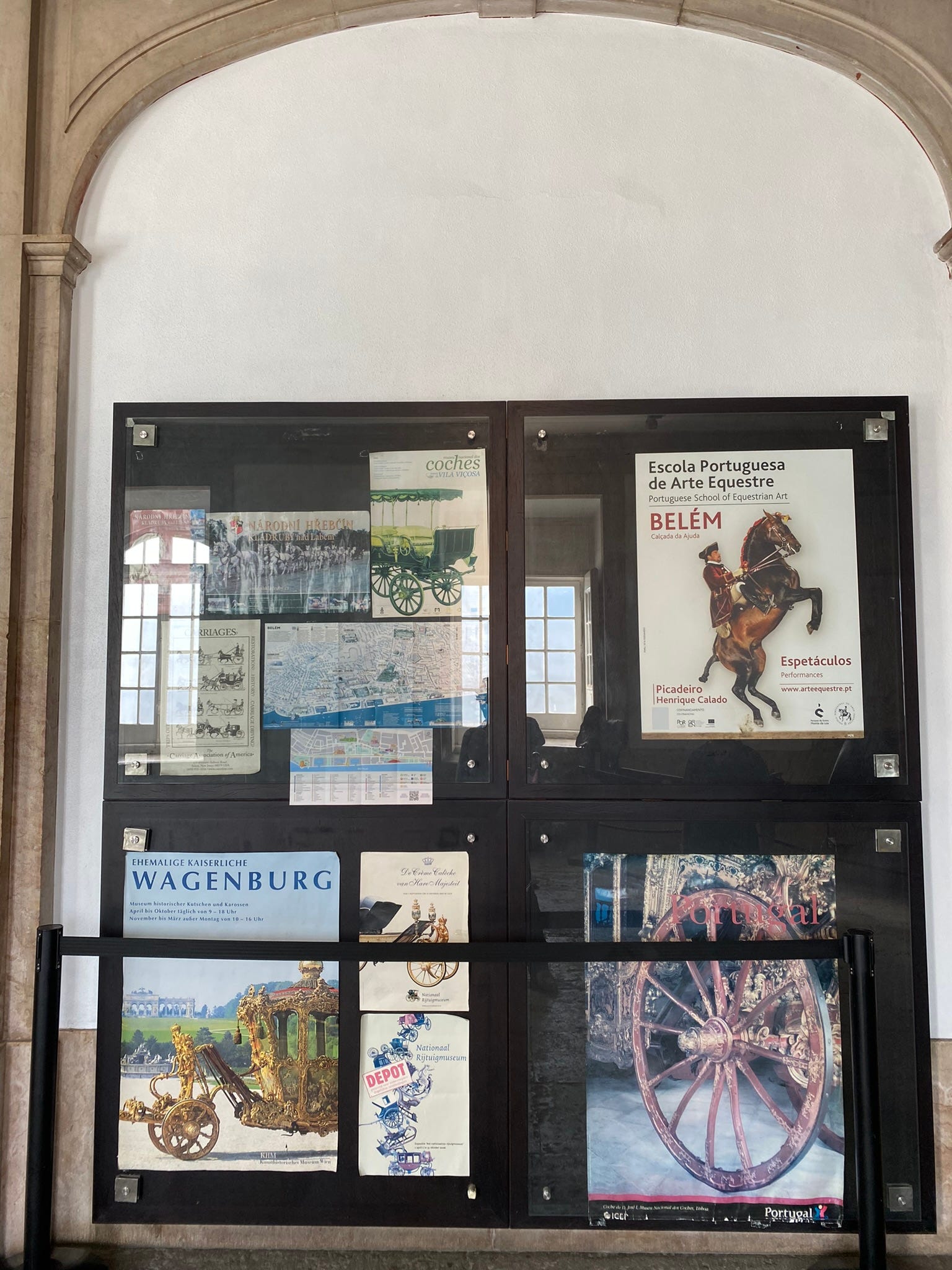
Sumptuous Carriages Traversing Two Worlds: The Museu dos Coches, Belem.
A Brief Review

The National Carriages Museum is an oddity, there are few national museums dedicated entirely to carriages. The museum’s size and prominent position, towering over Belem train station, proclaims the importance of the carriages inside, much like the lavish carriages themselves once tooted the status of their passenger. The slick modern design of the museum’s new building elevates them to the artistic heights of ‘master works’, rather than presenting them as old relics of a bygone era. But was something lost in the collection’s relocation from their original home at the Picadiero Real, an 18th-century Royal Riding School-cum-Royal Garage?
In 2015, the majority of the carriages were moved to the new purpose-built gallery, which evokes the utopian urbanism of the 60s while reminding us of its shortfalls. Concrete walkways intersect open public space in what appears to be not just a museum, but an urban development project. The carriages are held in a vast concrete block hovering like a spacecraft above commercial units and a public courtyard. The architects Paolo da Rocha and Ricardo Gordan sought to integrate the museum complex within its historic surroundings, namely the Jardim Afonso de Albuquerque and Rua Da Junqueira, encouraging the flow of tourists around the surrounding museums and monuments.
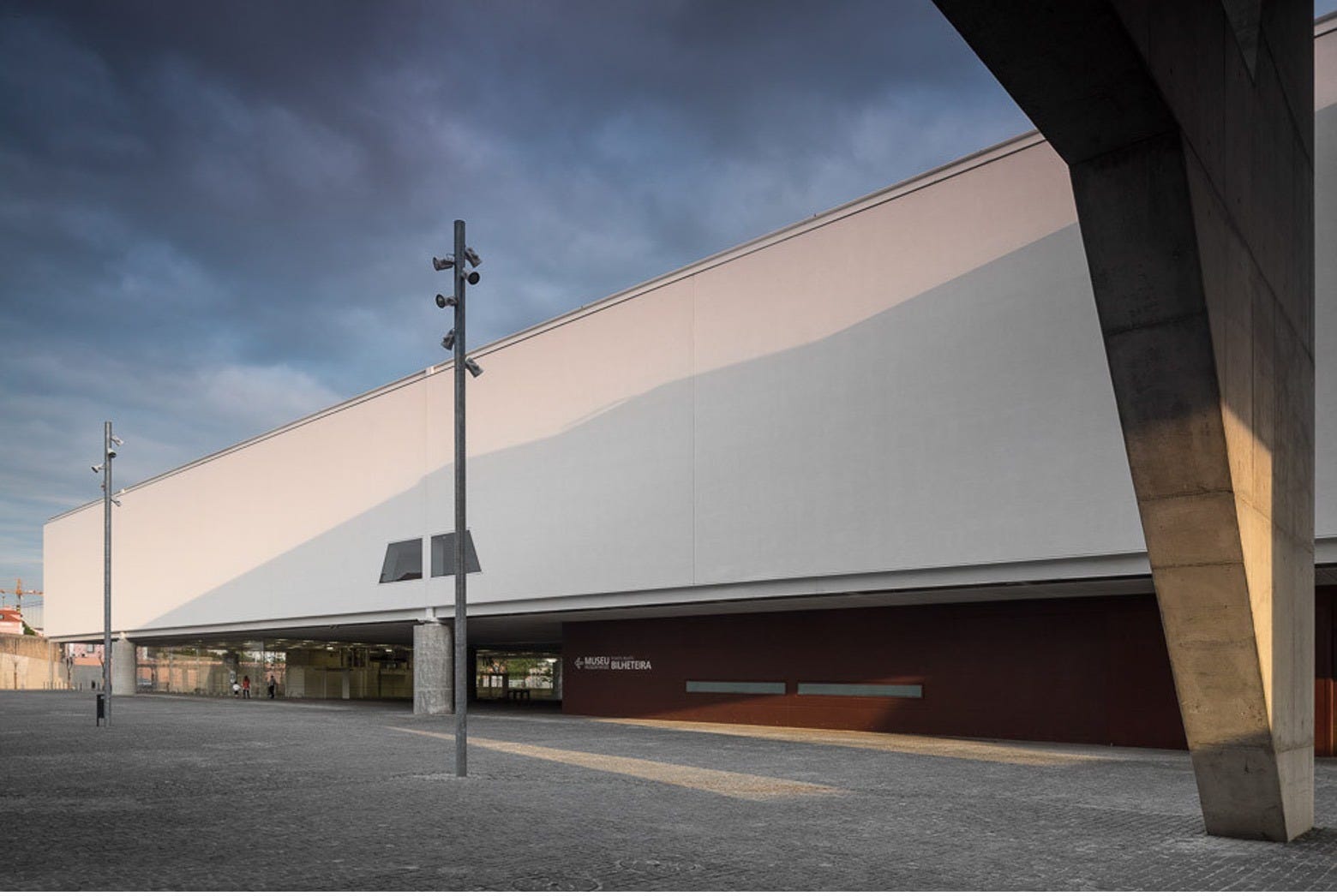
On arrival at the new building, there is a feeling of unaccomplished optimism on the part of the museum planners; the space is vast and feels underattended, particularly when compared to the perpetually heaving Jerónimos Monastery just down the road. The building’s International Modernist Style does little to pre-empt the Baroque opulence of the carriages held within, and despite being less than a decade old, the entrance hall already looks jaded. Making their way past the cloakroom, the visitor is ushered by rope cordons to the exceedingly undramatic and plain concrete stairs. The architects envisaged visitors entering via the huge hydraulic lifts, to the affect of being beamed up into a spacecraft, the stairs were only added as a legal health and safety requirement and as such look like a fire-escape. Sign posting is not a strength and without prior research, the existence of the Picadiero Real is unobvious.
Despite initial disappointment at the drab municipal feel of the building’s entrance, this in fact heightens the impact of the carriages at the culmination of the stairs. More cordons direct the visitor left, to an expansive chamber, beneath a slit of glass running the width of the room, an early 17th-century carriage, the oldest and rarest of the collection, looks otherworldly. The floor text explains it belonged to Felipe II of Portugal, III of Spain, and was used to travel between Madrid and Lisbon in 1619.
The collection is split between two vast atriums, and the path through the collection is loosely chronological. The South atrium displays carriages spanning the 17th-18th centuries, and the North atrium displays those of the late 18th-20th centuries, leading back to the fire escape stairs.
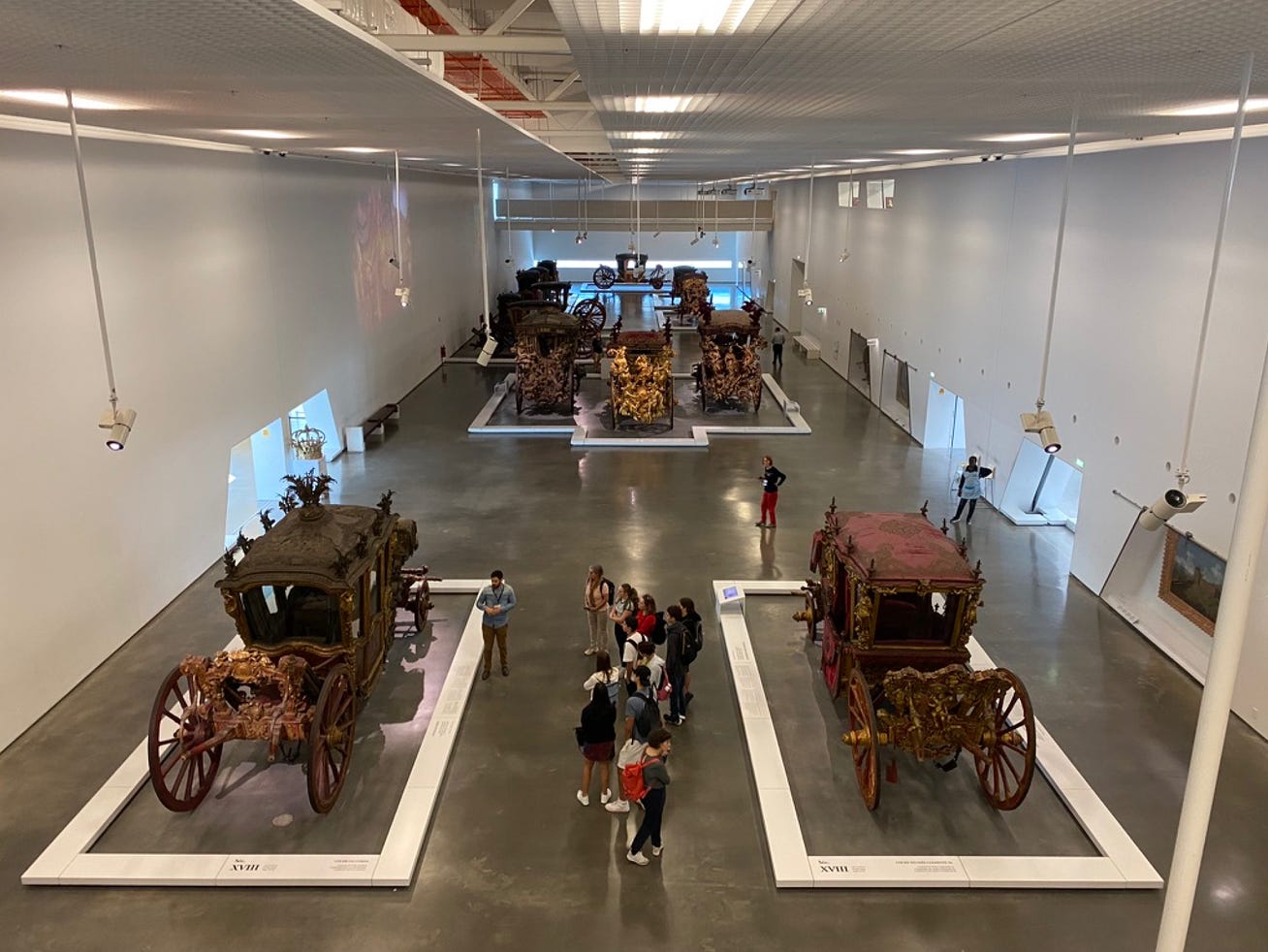
The vague chronology does give a vague narrative to the display, but this can be confusing with the lack of written information provided. The luxuriousness of the carriages traces the wealth of the Portuguese Empire. Each carriage is surrounded by a low barrier mounted to the floor and displays information about the carriage in three languages (Portuguese, English and French). The style, date and ownership of the carriage are given along with its purpose or role in notable journeys or processions. Other than this, there is little contextual information about the collection; the visitor is left asking when the collection was formed, by whom, or where the carriages came from. Perhaps, adding to this impression of the museum as a spacecraft — the carriages having been beamed up for analysis by curious extraterrestrials.
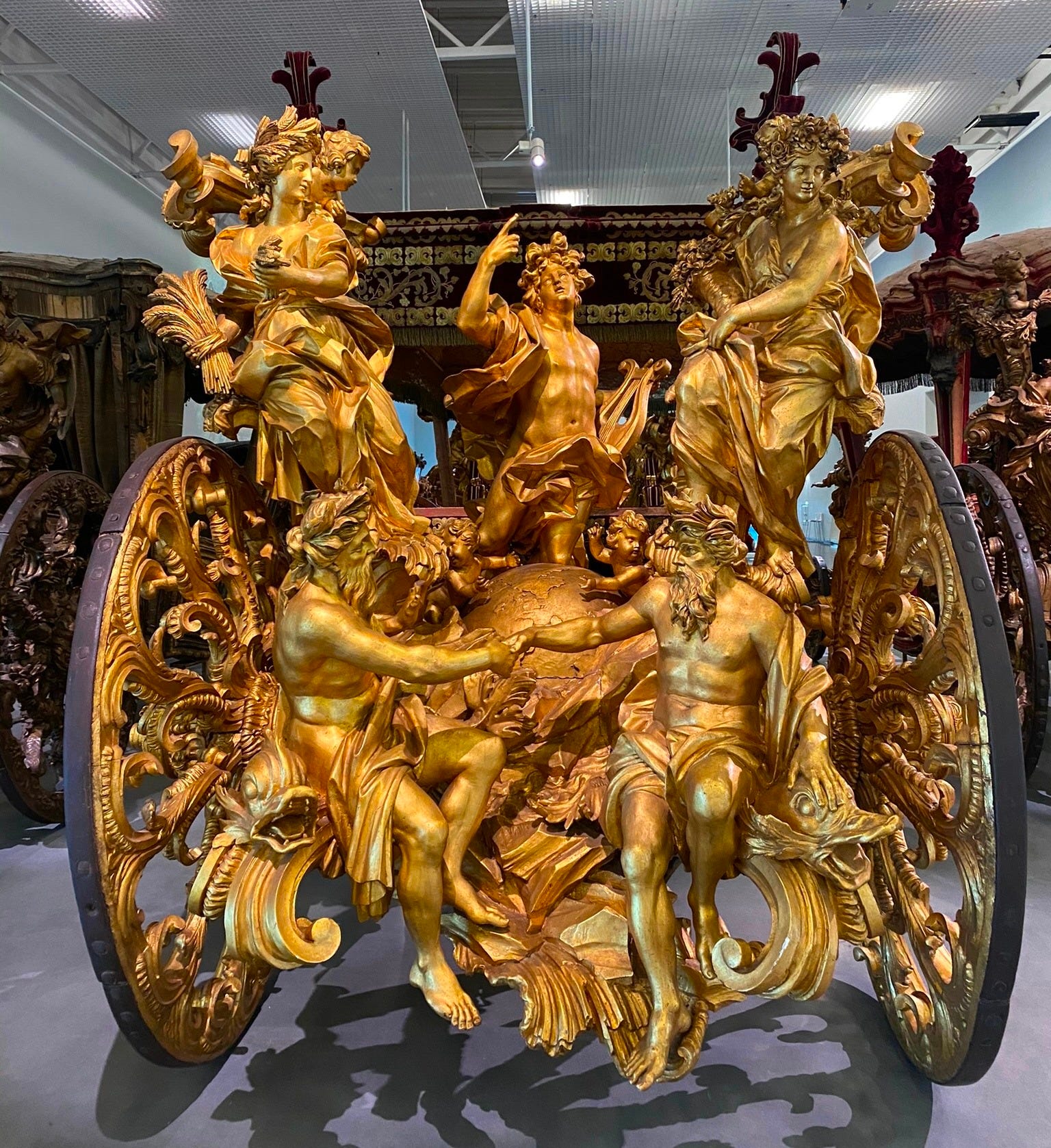
Despite the lack of wall (or floor) text, visual information is offered for context, screens display animated transitions of historic paintings and illustrations demonstrating how the carriages were used, for instance, streetscapes depicting processions. This point is visually reinforced in the arrangement of the carriages, which mimics a procession, highlighting the carriages’ importance as ceremonial objects. The collection is anchored by the prize three carriages, belonging to King Juan V’s 1716 embassy to Rome; the text for these is more expansive, explaining the symbolism behind their complex ornamentation.
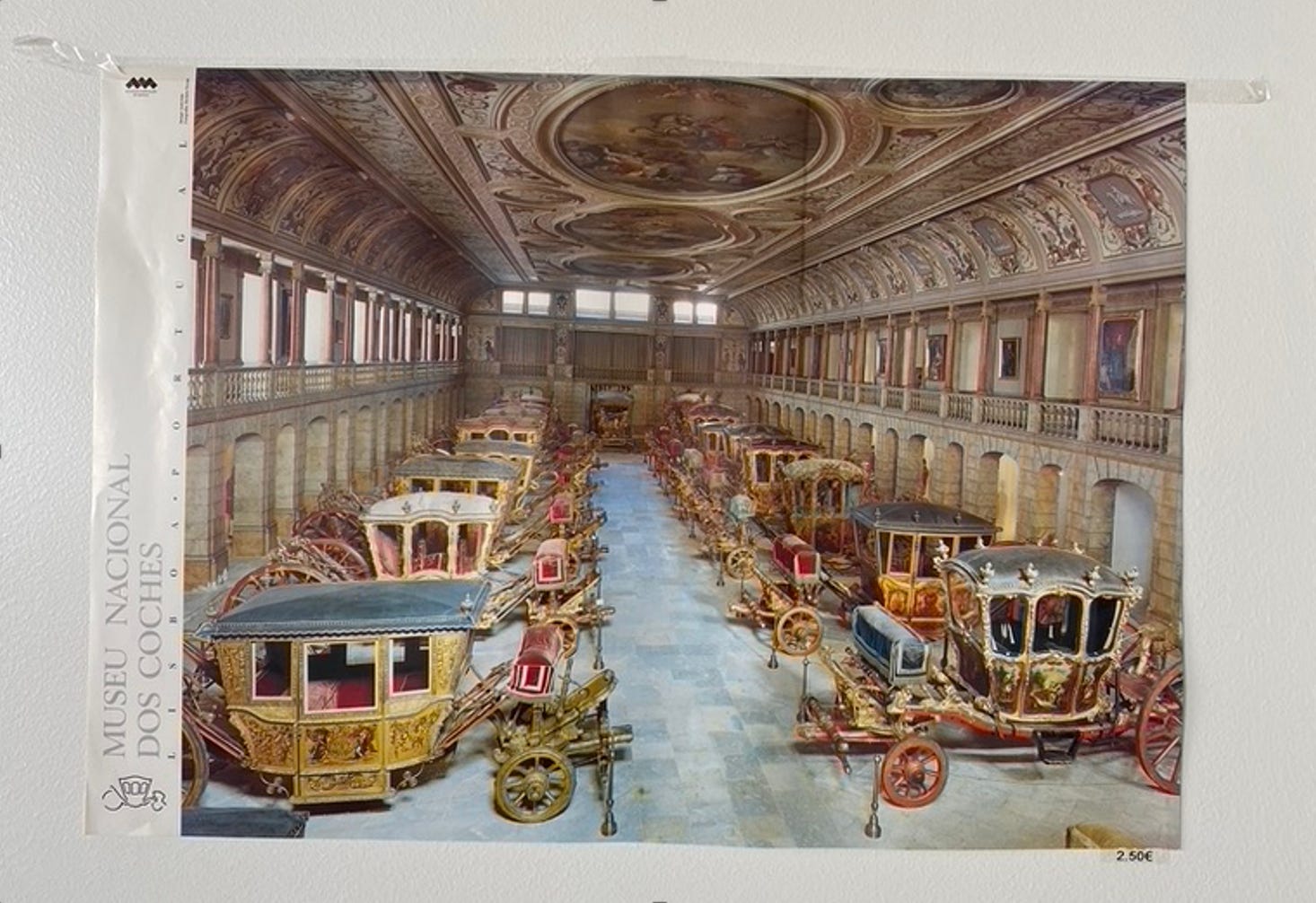
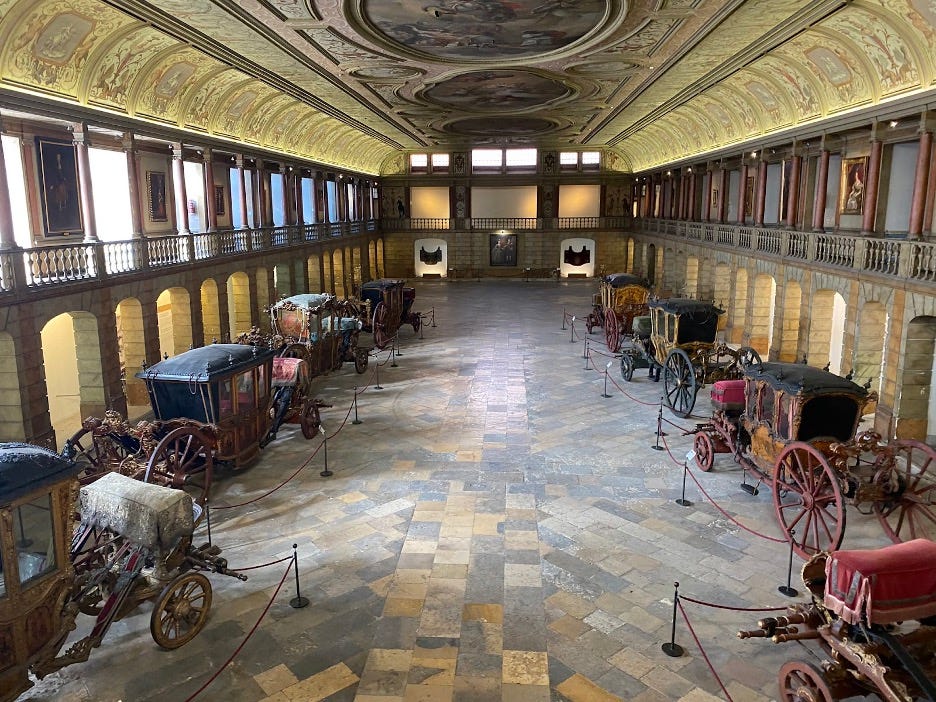
The other area of deeper explanation describes the innovation of the Berlin (a type of carriage developed in Berlin that rested the passenger compartment on leather straps rather than a wooden beam), this innovation is also explained in further detail at the Picadiero Real, however the importance of the innovation for the narrative of the collection is more relevant at the new museum since the transition from supporting carriages with a wooden beam to hanging the compartment on leather straps appears on nearly all subsequent coaches displayed.
There is little information about the history of the building, how the collection developed or the museum’s origins, which is a great pity as the story of the collection and the Picadiero Real is intimately tied to the preservation of the carriages. One would assume this information would be available at the Picadiero Real, and the visitor is left questioning whether they had visited the wrong building first.
While the new building is impressive, its sleek concrete walls and floors offer space and the ‘white cube gallery’ setting for pondering the carriages, the Picadiero Real offers a more atmospheric and intimate viewing experience. Transporting the visitor back in time and giving a greater visual sense of the late 18th century, which alludes to the founding of the museum in that building over a century and a half ago. Both museums would benefit from better signposting and more information. A particular loss is the fascinating story of the origins of the museum and the history of the collection itself.